Satrapi and Douglass: Geniuses in Ethos and Identity


Though two different works about two different issues, Persepolis by Marjane Satrapi and The Narrative of the Life of Frederick Douglass reflect and combat the issues of the Islamic Revolution and American Slavery in similar styles. The two use their descriptiveness and appeal to logic and emotion to get the readers into their shoes.

In Persepolis,a graphic novel,Satrapi states that she wants to be a religious “prophet” like the ones she has read about. She is 10 when the events of the Islamic Revolution in Iran started to take place. Satrapi sees the issues around her, one of them being that she is made to wear a veil. The people that surround her being persecuted and even murdered. She highlights a time that a local cinema had caught fire. When people wanted to rush in and help the police pushed them away. She says the firemen didn’t arrive until forty minutes later. “The BBC said there were 400 victims… But the people knew that it was the Shah’s fault!” Before this time Satrapi lived the life of a normal young girl.

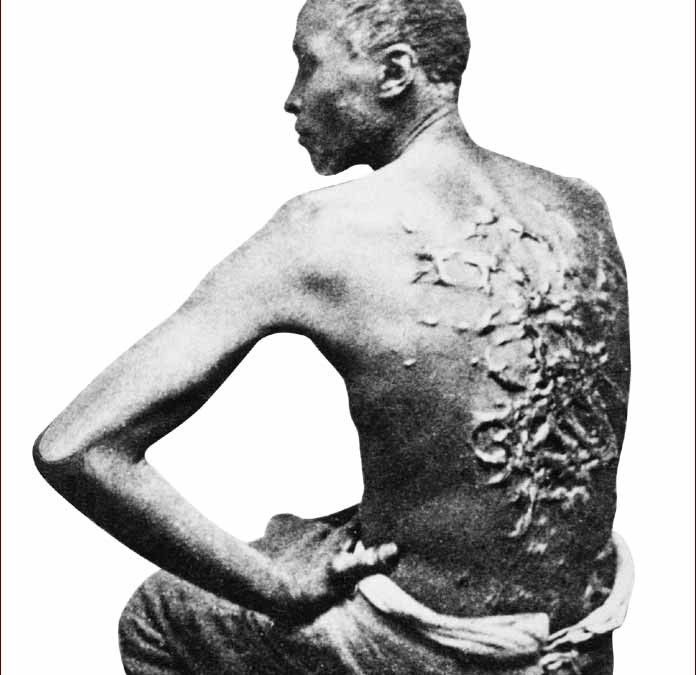
In The Narrative of the Life of Frederick Douglass, Douglass also started his life as a normal young child, yet he was deceived when around age 8 he was thrown into the harsh lifestyle of slavery. He was born a slave, he had yet to live the life. Douglass reflects on times when he would go the whole year nearly naked, even winters. He would sleep on the ground with little to eat, and the things he’d seen by this age were awful. Douglass discusses the whippings he’d witnessed, one being Aunt Hester. “Soon the warm, red blood came dripping to the floor”, such descriptiveness will make you feel it in your stomach.

While the two had experienced two different things, they were things that no child should be made to go through. The way that they describe these experiences are their way of putting the reader into their shoes and it will appeal to your emotions. While reading both of these works I felt guilty because I wished there was something I could do and I still can’t believe that people in our generation, like Satrapi, have had to live through times like these. And I think that’s what both of these writers wanted. Douglass wanted light shone on slavery at the time because when he published his book in 1845, slavery had not yet been abolished. It would take another 20 years for that to happen. Satrapi published Persepolis in 2000 and I think that she was reflecting, but also showing that at that time their was still turmoil in the Middle East, just like today.

islamicrev
Iran Revolution: Daily Express
Scarred-Slave-696x675
Whipping Scars on American Slave: Speakeasy Ideas

To further compare the two, in a chapter called The Key, Satrapi mentions a time when she came home to her maid crying. When asked what was the matter the maid replied, “They gave this to my son at school. They told the boys that if they went to war and were lucky enough to die, this key would get them into Heaven.” It’s a chilling feeling to think about young boys going to fight for a cause that they don’t know much about. It’s like they are being sold away into war, making it the only thing they know. The only way to get out is to die, much like slavery. The slaves didn’t have an option, much like these boys didn’t have an option. Douglass shares his experiences with moving from owner to owner without his consent. He went through many owners and often times didn’t know why.

We would think of this as another appeal to emotion and while it is, I see it as more of a lack of identity. Both of these books have this underlying theme of identity, or lack thereof. Douglass is a slave, he’s nothing more than another man’s property while Satrapi is made to wear a veil, shielding anyone from seeing her. It’s like these people don’t exist to the people above them. Douglass states, “The white children could tell their ages. I could not tell why I ought to be deprived of the same privilege. I was not allowed to make any inquires of my master concerning it.”  Much like the slaves being forced to work and endure whippings, the young men of the Iran Revolution are forced from their homes, made to fight and endure bullets and bombs flying at their heads. And if you questioned it, may God have mercy on you.

Identity doesn’t exist to these people. They just have to push through it and hope that they survive, which is why the ones that persevere and bring attention to these things like Douglass and Satrapi are considered, among many, heroes.

Thekey
Persepolis: pp. 102


While reading, I couldn’t help but realize how the two seem to speak to their audience. Throughout both works, they would address the reader. Every time Satrapi wanted the reader to know something she would draw herself to look towards them. At first, I didn’t really catch on, but after discussing the book with people that have also read it I started to notice. Satrapi introduces her new style to us, she gets into to rock music and western culture and it’s something that she takes seriously as her distraction from what’s happening around her. She becomes rebellious and she wants us to know. As she finishes perfecting her outfit she turns toward the reader to say, “I put my 1983 Nike’s on and my denim jacket with the Michael Jackson button, and of course, my headscarf.” That type of style and attitude is looked down upon in her country and she wants us to know that she went against the norms anyway.

Douglass does the same thing at the beginning of chapter 11 of his narrative. He says, “I now come to that part of my life during which I planned, and finally succeeded in making, my escape from slavery. But before narrating any of the peculiar circumstances I deem it proper to make known my intention not to state all the facts connected with the transaction.” This is the chapter in which Douglass escapes slavery, but he is smart in doing so. He tells the reader, “I’m gonna tell you my story of escaping, but I’m not gonna tell you how in case any slave owners come across this”, for lack of a better word.

Both do this for appeal, they don’t want to simply tell their stories. They want to make you a character in their story, someone that they can make a connection with. That’s what got me, and other readers alike, fill with emotion and able to understand these writer’s ideas.

1983nikes
Persepolis pp.131

It’s not just the ability to write well that makes these writers so great at the appeal that they possess. It is their abilities to escape the issues that they were faced with and the fact that they were able to enlighten the world on what they had experienced. That alone should be enough for some people to be open minded about what the issues discussed. And what is even more impressive is that the issues were combated. Slavery was abolished and though racism still exists today, all people are able to live free in America. Though there is still fighting in the Middle East, at least there are many countries joining together to take action. And that is what makes these works great.

Joey Diaz: Unique Hero

joeydiaz
Joey “Karate” Diaz – Third Monk

Of the 9.4% of the American population that falls victim to the abuse of narcotics and illicit drugs (AAC), not many have had the ability to fully recover and make something of themselves. While it is possible for everyone, most people don’t. Joey Diaz is one that defied the odds, making a name for himself in the world of comedy. He would later find himself with gigs all over Hollywood. This is his story.

Real name Jose Antonio, Joey Diaz, is a popular comedian, actor, and podcast host. Born in Havana, Cuba in 1963, Diaz was raised in North Bergen, New Jersey. Diaz grew up facing a rough childhood, losing his father at three years old. His mother owned a bar which produced all of their income. His mother died when he was just sixteen, he found her dead. This lead him to bounce around from  house to house, never having a real home. All of this moving around caused Joey to become more reckless, which caused him to start selling and abusing drugs, the main one being cocaine. Many will criticize Joey for his drug use, but not everyone knows how it feels to lose both parents at a young age. I don’t think Joey was right, but I don’t think that he was wrong in the path he went down. These things can happen to anyone and I think that’s what Joey is going after.

joeykid
Joey in High School – Reddit

Joey decided that in 1985 he would give college a try. He studied at the University of Colorado at Boulder, attempting to make it in the school of economics. Diaz quickly learned that college was not the route he wanted to take as he hated his time in Colorado and ended up scoring a job selling roofing. He made a decent living while doing so, but was still unhappy. Still dabbling in the drug world, Joey found himself in prison for kidnapping and aggravated robbery in 1988. While in prison Joey was very good at making the other inmates laugh, he was a funny guy that people liked being around. He was friends with everyone. At a screening where inmates were allowed about an hour of free time, the projector broke. As the inmates grew outraged, Joey was convinced by fellow inmates to stand up on the stage and crack some jokes. This sparked Joey’s comedic flame. It was at that moment that he knew he wanted to pursue stand-up comedy.  It’s the fearlessness of Joey that made people like him.

Diaz didn’t find success in comedy right away as he says it was a “last resort”. He had held many jobs before, as well as his selling of drugs that he carried with him everywhere. It took him three years to score his first gig, 1991 saw Joey at his first show at Comedy Works in Denver. Diaz also took place in some small stand-up competitions which got him sent to a bigger one in Seattle where he placed 6 out 40. Later, Joey ran into some issues with the manager of the Comedy Works. This forced Joey to move to Los Angeles in 1995. He soon found himself in an altercation with an ex-wife’s boyfriend that had him moving back to Colorado. Shortly, in 1997, he met his long-time friend and fellow comic, Joe Rogan. Rogan, who is well known for stand-up, hosting the show Fear Factor, as well as being a commentator for the UFC was a saving grace for Joey.

joeystandup
Diaz at a Comedy Show – Alchetron

Rogan had Diaz follow him on his tours where Joey opened for him. This helped launch Joey’s career which he says he is “forever grateful” for. This also opened a film career for Diaz where he is seen in movies such as The Longest Yard, Spider-Man 2,  Taxi, as well as some television shows such as My Name is Earl. He combined all of these aspects into one career which he still pursues.

Diaz is most famous for his frequent visits on Joe Rogan’s podcast, “The Joe Rogan Experience” which is home for some of his best moments as well as his own comedy shows. It is also where I have learned everything I know about him, as well as from his website, joeydiaz.net. Joey says that his past of dope slinging and crime is what gives him most of his material for stand-up. As I have watched Joey’s stand-up, I must say that when he is reflecting on his past it makes me laugh the most. I feel that because Joey is so original and uses his own actual life experiences in whatever it may be such as stand-up, podcasts, and movies, his originality and confidence to put it all out there is what makes him shine. People don’t want to see a bashful comic, they want someone like Diaz that doesn’t care what you think about him. He just wants to make you laugh.

HeartfeltBarrenAyeaye-max-1mb
Joey on The Joe Rogan Experience – Gfycat

To further display his fearlessness, Joey can be found on YouTube, whether it be his own podcast or The Joe Rogan experience, hell, even in an interview; you can find videos where “Joey Diaz tells cocaine fueled stories”. While there are many videos out there on Joey discussing drugs and while he smokes marijuana on his podcast, The Church of What’s Happening Now, I feel that Joey serves an educational purpose. People bash Diaz for talking about drugs and his history of crime, but he often replies, “Hey, don’t hate me for something I did back in ’89. That’s not me anymore.” That’s all anyone can really say.

I, myself, before watching Joey was interested in exploring the world of drugs. I wasn’t going to go hardcore, but I figured since I was heading into college that I would venture into the world of psychedelics and party drugs. Those being speed, mushrooms, and LSD. I figured that trying something once wasn’t going to hurt me. While watching Diaz for his comedy, I carefully listened to his drug stories. The one that intrigued me the most was his battle with cocaine, which he, in the last 12 years, has overcome. Joey described his cocaine years as the, “worst years of my life.” He couldn’t function without it, so he thought. He bumped a line before getting on stage and after, on and off of set. He relied on substances alone so much that when he couldn’t get coke, he would settle for any thing that anyone could get for him. It affected his career, his friendships, but most of all it affected him. Diaz mentioned that after his mother had died he went on an “acid tear” and while his stories are comical, I felt how sincere he was. He’s been there and he doesn’t want anyone else falling into the same hole that he had once found himself in.

joeyweed
Joey Diaz with some Pot – Steemit

While Joey is an avid pot user and advocate for nationwide legalization, he does not condone or advocate any other forms of drugs. He says that it positively influences his life and is often seen on podcasts with a joint or a pipe in his hand. Diaz states that in influences his comedy, it aids him in creating material and his delivery of material. Because of marijuana Joey was able to help many people including Eddie Bravo and Bert “The Conqueror” Kreischer. Eddie Bravo, longtime Brazilian Jiu Jitsu legend, was an alcoholic for a very long time. Due to smoking with Joey he was able to put down the alcohol for good, though still a substance he’s living the life he’s wanted. Bert Kreischer, friend and fellow comedian of Joey, had never had a real connection with his father until Joey brought “THC Popcorn” to one of Bert’s hangouts. Bert said that it helped him have a heart to heart with his dad that changed his life forever. These life breakthroughs are due to Joey. He says he doesn’t enjoy getting people trashed. If you’re willing, he’ll give you a sample to “see where you stand.”

Someone that gives people weed may not seem like someone to look up to, but I think that’s what is so great about Joey Diaz. He’s different. He’s not Superman and he never will be. He may not be saving the world, but he is true to himself and helps others find their identity. He posts daily on social media and while they seem goofy or inappropriate, his posts will put a smile on your face. He tells people, “Don’t let em’ tell you dick. Go out there and be yourself, f–k the haters.” And that’s just it.

joeydiazjj
Joey earning his blue belt in BJJ – BJJ Eastern Europe

Today, Joey Diaz spends his time doing podcasts, making comedy, and practicing Jiu Jitsu. He has a wife of nine years and a three year old daughter, Mercy, who has made him “adore” fatherhood. He can be seen on his podcast, The Church of What’s Happening Now, where he tells his stories, shares his knowledge, and has some fun. I think that Joey is someone that will stay true to himself no matter how his life goes, with more fame or less fame. The guy is who he says he is and that’s enough for me to call him a hero and I hope that more people can fall into to his unique mindset.